kaf | goods | tape | dogv1 | vox | vara | fly | upb | upz | drop | dood
Bathing your dog is an essential part of responsible pet care. It keeps their coat clean and healthy, eliminates dirt, odors, and parasites, and strengthens the bond between you and your furry friend. However, many dog owners rush the process or use incorrect methods, leading to stressed dogs, irritated skin, or messy results. With simple preparation and step-by-step care, you can make bath time calm, safe, and effective for your pup.
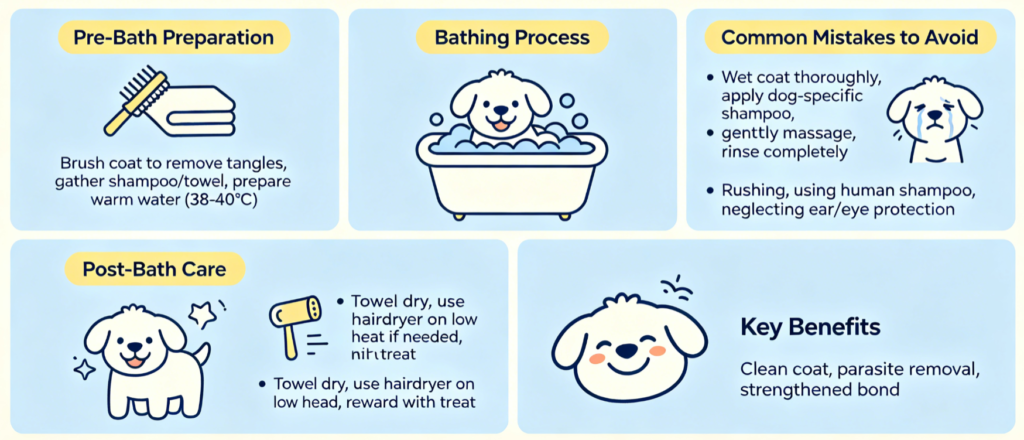
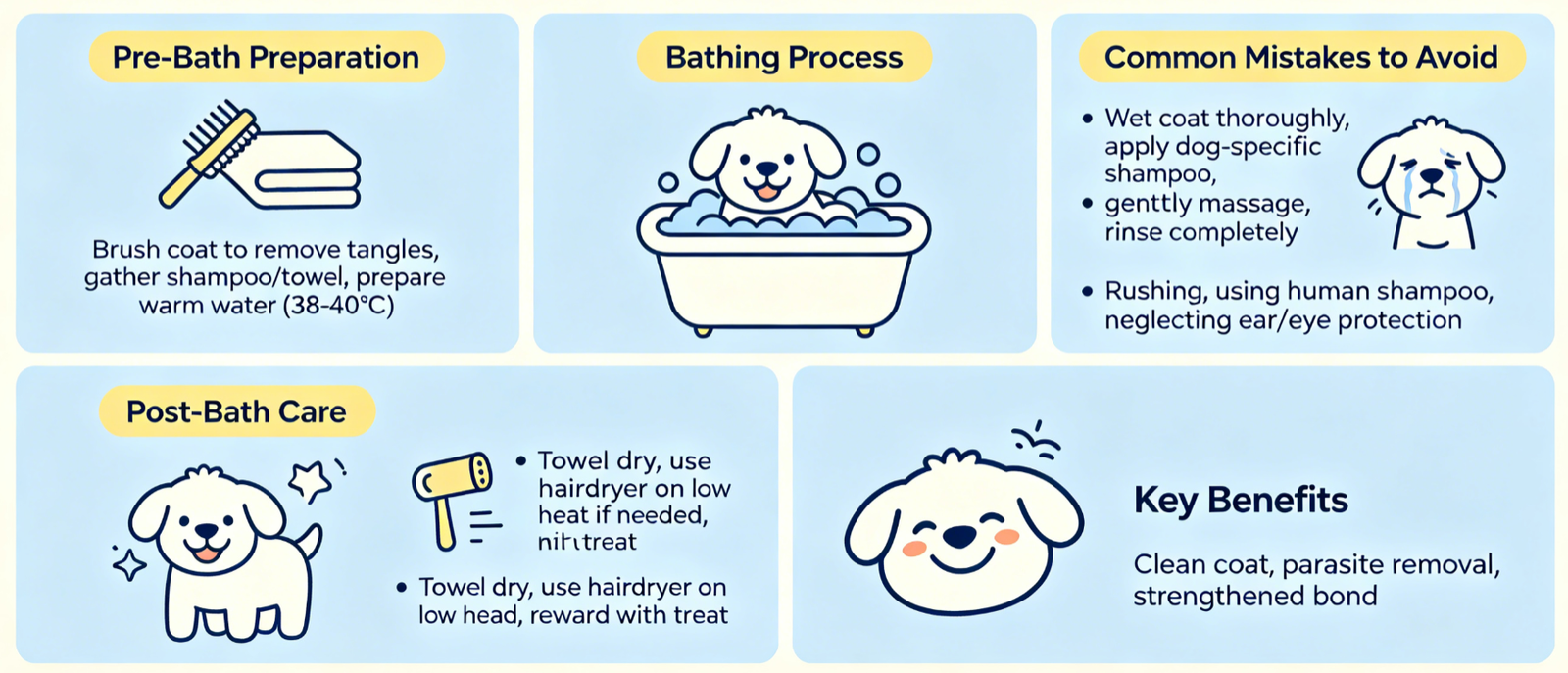
First, gather all supplies in advance to avoid interrupting the bath. You will need dog-specific shampoo, a large towel, a soft brush, a non-slip mat, and a cup for rinsing water. Never use human shampoo or body wash on dogs. Human skincare products have different pH levels that can strip dogs’ natural skin oils, causing dryness, itching, and sensitive skin issues. For puppies or dogs with allergies, choose mild, hypoallergenic dog shampoo for gentle protection.
Before wetting your dog, brush their coat thoroughly. Mats and tangled fur trap dirt and water, and they will become tighter and harder to remove once wet. Brushing also gets rid of loose hair and debris, making the whole bathing process much smoother. Pay extra attention to thick-furred areas like the neck, belly, and legs, where tangles most often form.
Next, prepare the water. Use lukewarm water around 90 to 95 degrees Fahrenheit, which is close to a dog’s natural body temperature. Hot water will scald their sensitive skin, while cold water makes them nervous and shiver. Fill a bathtub or sink with just enough water to cover their paws and lower belly. Place the non-slip mat on the bottom to prevent your dog from slipping, which helps them stay relaxed during the bath.
Start wetting your dog slowly and gently. Begin with their body instead of their face to avoid startling them. Once their coat is fully soaked, lather the shampoo evenly from the neck down to the tail. Massage their fur in soft, circular motions to break down dirt and oil. Do not scrub hard, as this can damage their skin. For dirty areas like paws and underbellies, spend a little extra time cleaning thoroughly.
Rinsing is the most critical step. Any leftover shampoo residue will cause itching, dandruff, or skin inflammation. Rinse repeatedly until the water runs completely clear with no foam. After full rinsing, wipe their face, ears, and eyes with a damp soft cloth—never pour water directly on their head to prevent water from entering the ear canal.
Finally, dry your dog immediately. Wrap them in a thick towel and pat their coat dry gently. For long-haired dogs, use a low-heat hair dryer to avoid matting. Keep them indoors until fully dry to prevent colds. With consistent, gentle bathing habits, your dog will stay clean, comfortable, and healthy all year round.