
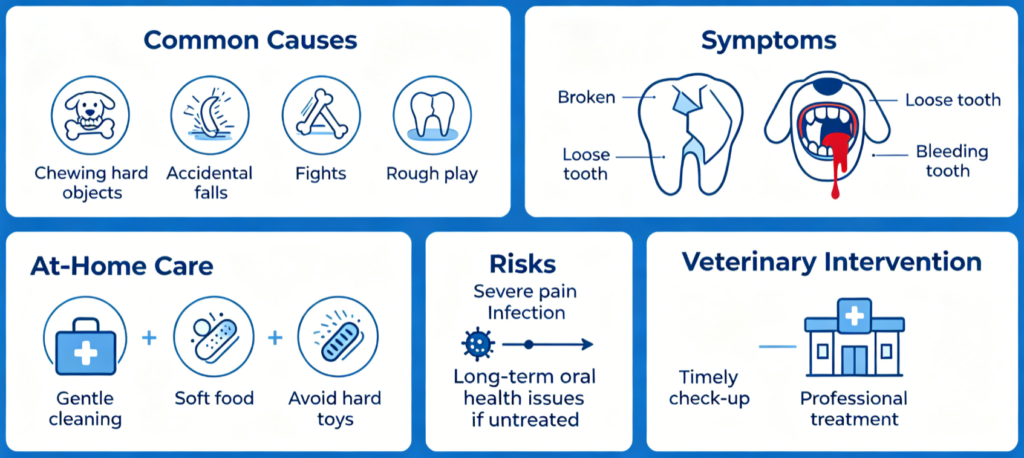
Dogs often suffer tooth injuries from chewing hard objects, accidental falls, fights, or rough play. A broken, loose, or bleeding tooth can cause severe pain, infection, and even long-term oral health issues if left untreated. Proper at-home care and timely veterinary intervention are critical to protect your dog’s oral health and comfort. Knowing how to respond correctly can prevent minor injuries from turning into serious medical problems.
goods | vox | dogv1 | tape | vara | kaf | fly | upz | drop
First, pet owners need to identify common signs of tooth injury quickly. Typical symptoms include excessive drooling, bleeding from the mouth, difficulty chewing, refusal to eat hard food, and constant pawing at the mouth. Some dogs may become irritable, lose appetite, or develop bad breath due to hidden wounds or bacterial growth. For visible injuries, you may notice chipped tooth enamel, cracked teeth, loose teeth, or swollen gums around the injured area. Once these signs appear, immediate care is necessary.
For emergency at-home care, safety comes first. Do not attempt to pull loose teeth or clean deep wounds aggressively, as this may worsen bleeding or damage oral tissues. Start by gently wiping away external blood with a clean, soft gauze. If bleeding persists, apply light pressure on the injured gum for 2–3 minutes. Keep your dog calm and restrict their activity to avoid further mouth trauma. Additionally, withdraw all hard toys, chew sticks, and dry kibble temporarily. Offer soft, room-temperature food or water only to reduce friction on the injured tooth.
Long-term post-injury daily care is equally important. Maintain gentle oral hygiene once the acute pain and swelling subside. Use a soft-bristled dog toothbrush and enzymatic toothpaste formulated for canines to clean the surrounding teeth lightly, avoiding direct contact with the injured spot. Avoid human toothpaste, mouthwash, or any medicinal products without a vet’s approval, as they contain toxic ingredients for dogs. Check your dog’s mouth daily for swelling, pus, or recurring bleeding to catch signs of infection early.
Most importantly, never skip a professional veterinary checkup. Minor enamel cracks may seem harmless, but they can expose tooth pulp and lead to abscesses or nerve damage. Vets can conduct a full oral examination, take dental X-rays, and provide targeted treatment such as tooth bonding, medication, or extraction if needed. Follow the vet’s dietary and care instructions strictly during the recovery period.
In conclusion, dog tooth injuries require careful emergency handling, daily gentle care, and professional medical support. With proper management, your furry friend can recover quickly and avoid lifelong oral complications.