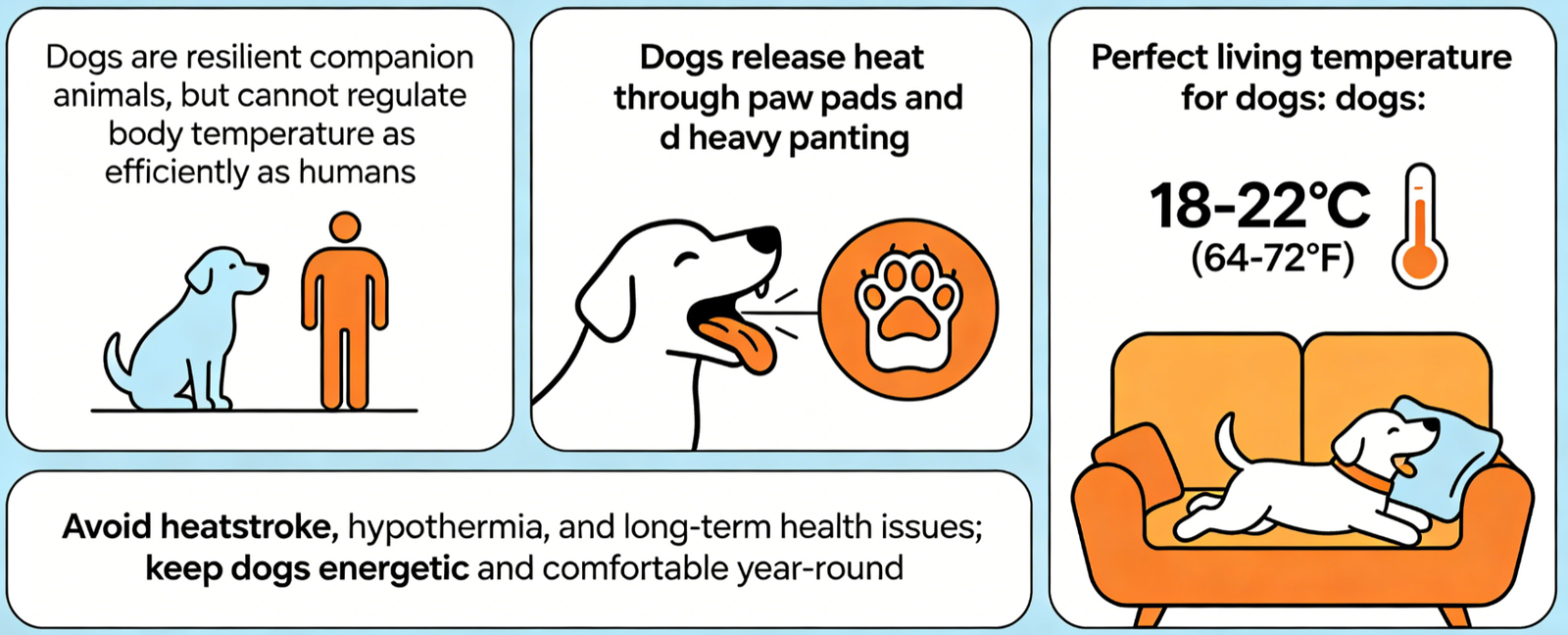
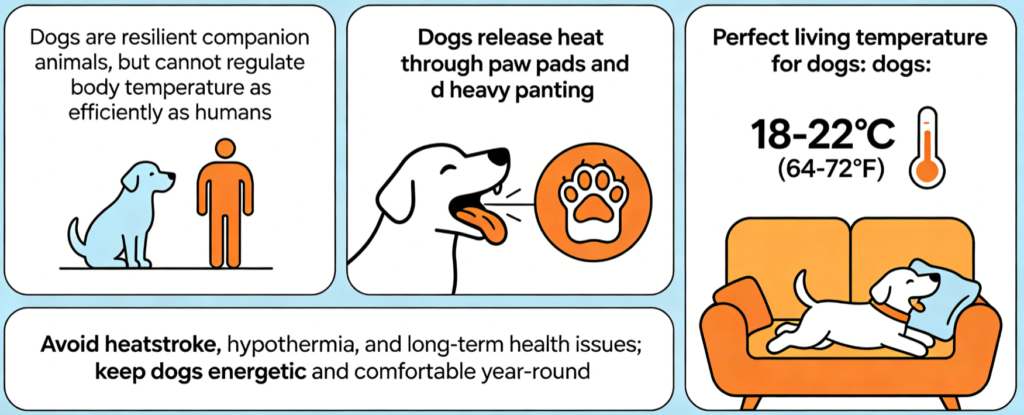
Dogs are resilient companion animals, but they cannot regulate their body temperature as efficiently as humans. Unlike people who can sweat across most of their skin, dogs only release heat through their paw pads and heavy panting, making them extremely sensitive to extreme temperatures. Knowing the perfect living temperature for dogs is essential for every pet owner to avoid heatstroke, hypothermia, and long-term health issues, and to help furry friends stay energetic and comfortable year-round.
goods | vox | dogv1 | tape | vara | kaf| fly | upz | drop
The optimal indoor living temperature for most adult dogs ranges from 65°F to 75°F (18°C to 24°C). This mild temperature range matches dogs’ natural physical needs, allowing them to maintain a stable body temperature between 101°F and 102.5°F with minimal effort. In this environment, dogs can rest, play, and digest food normally without wasting extra energy to fight heat or cold. For daily household care, this temperature zone is universally safe and suitable for mixed-breed dogs and most common medium-sized pet dogs.
Temperature tolerance varies greatly by dog breed, coat type, and age. Cold-resistant breeds such as Huskies, Samoyeds, and Malamutes have thick double coats and can tolerate temperatures as low as 50°F (10°C) comfortably. However, they still need warm shelter once temperatures drop below 40°F (4°C). On the contrary, short-haired and thin-skinned breeds like Chihuahuas, Pugs, and Greyhounds struggle with cold weather. They start feeling chilly below 65°F and require blankets or warm clothes in cool indoor environments.
Puppies, senior dogs, and sick dogs have much weaker temperature adaptability. Their immune and thermoregulatory systems are fragile, so their ideal temperature is slightly higher, between 70°F and 78°F (21°C to 26°C). Extreme heat is more dangerous for dogs than cold. Temperatures above 85°F (29°C) put dogs at high risk of heat exhaustion, while temperatures over 95°F (35°C) can cause fatal heatstroke within hours. Signs of overheating include excessive panting, drooling, lethargy, and rapid heartbeat.
To protect dogs’ health, owners should adjust indoor temperatures seasonally. In summer, use air conditioners or fans to cool the room and provide plenty of fresh water. In winter, avoid drafty spaces and prepare warm bedding. Avoid leaving dogs outdoors for long in extreme weather. By maintaining a mild, stable living temperature, pet owners can effectively prevent common seasonal illnesses and help their dogs live a longer, happier life.